
DHI hair transplant: the complete guide
DHI — direct hair implantation — is prized for the control it gives a surgeon over each graft, which is why it is often chosen for hairlines. Here is exactly how it works, what it suits, and how it compares to Sapphire FUE.
DHI is one of the two names you will see on almost every hair transplant quote from Turkey. It stands for direct hair implantation, and its defining feature is precision — the surgeon controls the placement of each graft directly. This guide explains how it works, what it is best suited to, and how to think about it alongside Sapphire FUE.
What DHI is
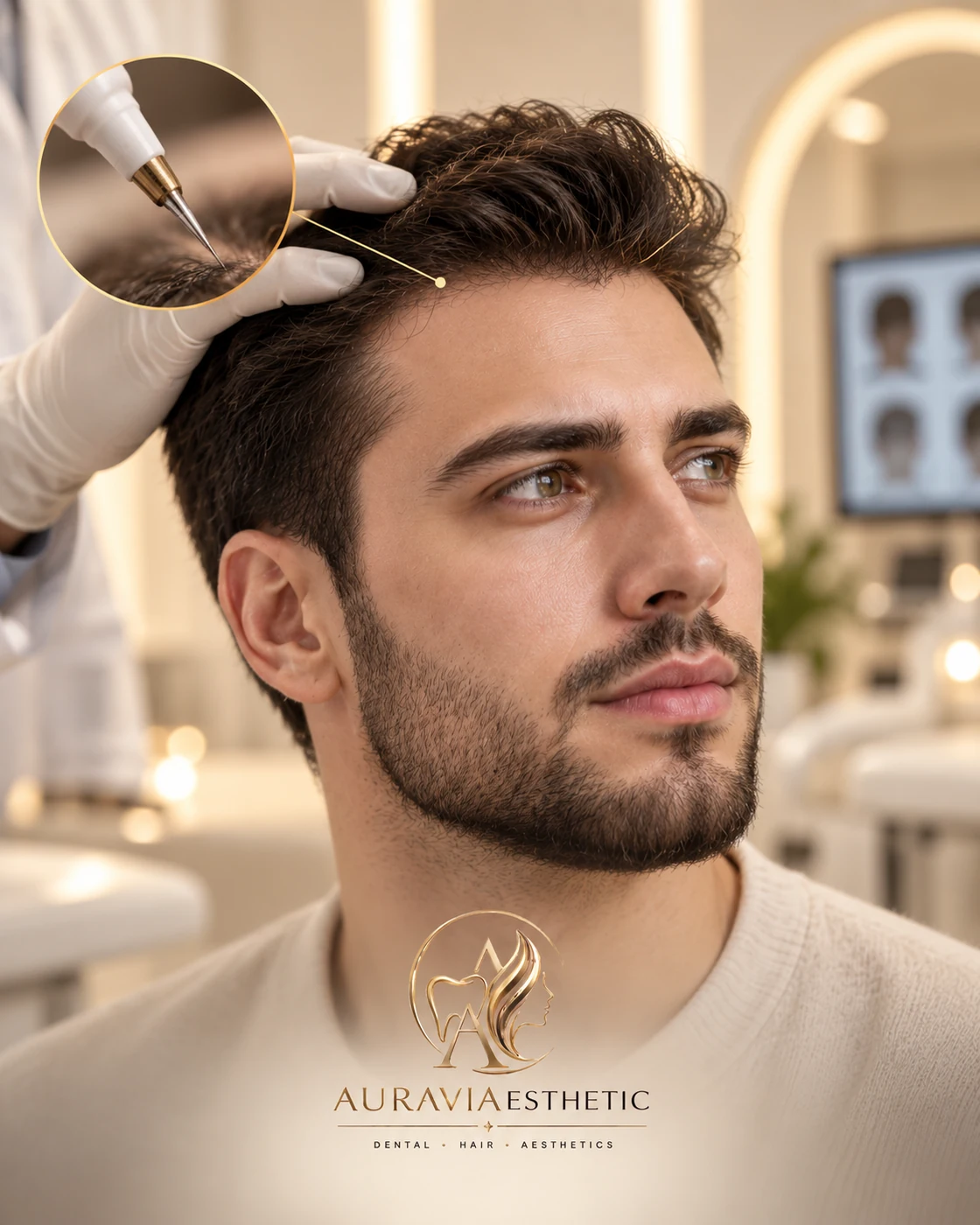
DHI uses a pen-like implanter — often called a Choi pen — that both opens the channel and places the graft in a single motion. Because the surgeon sets the depth, angle and direction of each hair as it goes in, DHI gives fine control over how the new hair sits and grows. It is a form of FUE, the modern extraction method, distinguished by how grafts are implanted rather than how they are taken.
How DHI differs from FUE and Sapphire FUE
In all three, grafts are extracted from the donor area one by one. The difference is placement. In Sapphire FUE, the surgeon first opens the recipient sites with a sapphire blade, then places grafts into those channels. In DHI, opening and placing happen together with the implanter pen. We compare the two directly in Sapphire FUE vs DHI, and cover pricing in the hair transplant cost guide.
What DHI is best for
The direct control DHI offers is often favoured for the hairline and other detail areas, where the angle and direction of each hair matter most to a natural look, and for achieving density. It can be an excellent choice — but so can Sapphire FUE in skilled hands. As always, the surgeon's judgement about your case matters more than the method itself.
Unshaven DHI
Because grafts are placed one at a time, smaller DHI cases can sometimes be done without fully shaving the recipient area, which keeps the change discreet — useful if you would rather not advertise the procedure. Larger sessions usually still need shaving for access and precision. Whether unshaven is realistic depends on the size of your case; your surgeon will tell you.
The procedure day
The procedure is carried out under local anaesthetic, so you are awake but comfortable. Grafts are extracted from the donor area, kept in optimal conditions, then implanted with the pen. It is a long but not painful day; most people read, listen to music or doze through it.
The recovery timeline
Recovery broadly follows any modern transplant: some tenderness for a few days, scabbing that clears in the first two weeks, then the expected shedding of the transplanted hairs in weeks two to six. New growth begins around three to four months, thickens by six to nine, and matures at around twelve months.
What drives DHI cost
As with any transplant, the number of grafts your case needs is the main driver. DHI can be more time-intensive per graft, which can affect price, but the honest comparison is one all-inclusive written figure covering the procedure, hotel, transfers and aftercare.
Is DHI right for you?
Often the best answer is a combination — DHI-style precision at the hairline, efficient placement behind it — decided by your surgeon after seeing your photographs. The right plan is built around your head and donor supply, not chosen from an acronym in advance.
This article is general information, not medical advice. Results vary between individuals and every procedure carries risk; a personal assessment by a qualified clinician is always required. See our medical disclaimer.
Frequently asked
See whether DHI suits your case
Send a few photos. A surgeon assesses your hairline and donor area, recommends the right approach and sends one all-inclusive price — usually within 24 hours.