
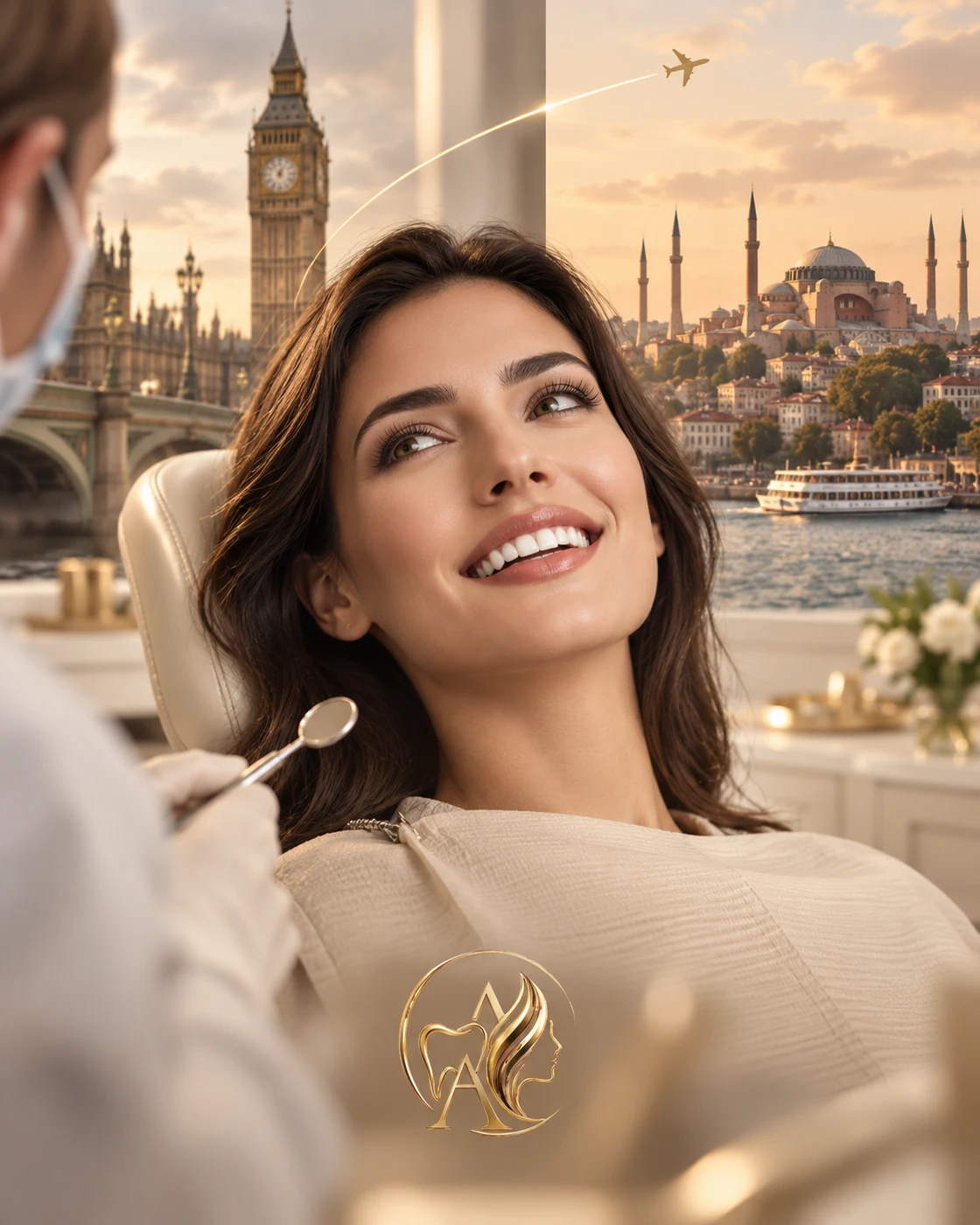
Dental treatment: UK vs Turkey — what to actually compare
Veneers, crowns and implants can cost considerably less in Turkey than in the UK. Here is why, how to compare the two honestly, and the one risk that matters more than price.
Dental work in Turkey often costs considerably less than in the UK, and that gap leads many patients to travel. It is a reasonable choice — but there is one risk in dentistry that matters more than the number on the quote. Here is how to compare the two, and what to watch for.
Why it costs less
As with any treatment here, the difference is local economics: lower wages, rent, laboratory and facility costs, widened by the exchange rate. Quality ceramics such as E-max and zirconia, and established implant systems, are widely used — ask which ones your plan specifies. A lower price usually reflects a lower cost base; the materials named in your plan tell you the rest.
Comparing like with like
A UK quote is usually treatment-only; many Turkish clinics quote the treatment, hotel, transfers and aftercare as one package. Compare the same scope before you compare numbers, and check whether pricing is clear and per-tooth or per-implant. Our dental veneers guide sets out what a complete package should include.
The real total cost of dental travel
Even after flights, treatment in Turkey often remains considerably cheaper than the UK equivalent, particularly for larger cases like full smile makeovers or implants. If the hotel and transfers are in your quote, the main additions are flights and travel insurance — and implants usually mean two trips. Do the honest full sum.
How many trips, and how much time off
Veneers and crowns are usually done in one trip of about a week: examination, preparation and temporary teeth at the start, the permanent restorations fitted at the end. Implants usually mean two trips — the implants are placed first, and the permanent teeth are fitted after a healing period of typically three to six months. For full-arch treatment such as All-on-4, a fixed temporary bridge can often be fitted within days, so in many cases you do not travel home without teeth — your dentist confirms whether this applies to you. Your written plan states the number of trips and nights for your case before you book flights; see our implant planning page for the details.
Aftercare once you are back in the UK
It helps to be clear about what can be done remotely and what needs a dentist in the room.
- What we coordinate remotely: your coordinator stays on the same WhatsApp number, and the photos you send are reviewed by the dentist who treated you. Many questions — sensitivity, a bite that feels high, how to clean around new work — can be answered this way.
- What needs care in person: a loose crown, a chipped veneer or gum problems need a dentist in person — either a dentist near you or on a return visit to Istanbul. We do not have a clinic or partner practice in the UK. What your treatment agreement covers, and who pays for what, is set out in writing before treatment starts.
- If you need urgent help: under NHS England's policy, if you develop pain or infection after self-funded treatment, the NHS provides urgent care to stabilise the problem. Treatment the NHS would not normally fund — replacing cosmetic veneers or implant crowns, for example — is not usually provided, so that part would be private.
- Take your records home: your treatment plan, X-rays or scans, the implant system and component details, and the materials used. Any dentist who sees you later will need them.
The risk that matters more than price
Here is the crucial difference from other treatments: in cosmetic dentistry the biggest risk is not the country or the materials — it is over-treatment. The temptation, anywhere in the world, is to crown healthy teeth that only needed veneers, or to treat more teeth than your smile shows. Once healthy tooth structure is removed, it does not come back. Judge a clinic by how conservative its plan is, not just by its price — we explain how in is dental work in Turkey safe?
"Is cheaper riskier?"
The risk is the clinic, not the country. There are conservative, excellent clinics and aggressive, poor ones in both Turkey and the UK. Manage risk by vetting the specific clinic — the dentist, the plan, the aftercare — rather than assuming price signals quality either way.
What you should never compromise on
- A named, licensed dentist in a Ministry of Health-authorised facility
- A conservative plan — ask why each tooth is treated and whether veneers can replace crowns
- A written, itemised quote rather than a cash figure
- Written terms for repairs or replacements, and reachable aftercare once you are home
Getting a real number
A real price depends on your teeth, so we give it in writing after seeing your photographs rather than publishing a figure that would mislead. Send a few photos and you will have a conservative plan and your own written quote to compare against any UK quote. A coordinator replies first, usually within 24 hours; the clinical review follows once your photos are complete.
This article is general information, not medical advice. Results vary between individuals and every procedure carries risk; a personal assessment by a qualified clinician is always required. See our medical disclaimer.
Frequently asked
Sources and further reading
External sites open in a new tab. They give general information and are not affiliated with Auravia Esthetic.
Get a conservative plan and a written quote
Send a few photos of your teeth. A dentist sends a conservative, written plan and a written quote to compare against any UK quote. A coordinator replies first, usually within 24 hours; the clinical review follows once your photos are complete.